
5 Signs Your Driveway or Parking Lot Needs Attention Before Summer Hits
- Jun 24
- 4 min read
Spring in Western Montana brings more than warmer temperatures and longer days. It also reveals what a hard winter left behind. Frost heave, snowplow wear, and months of freeze-thaw cycles have a way of exposing problems that were buried under snow all season. For homeowners and commercial property owners across Missoula, the Bitterroot Valley, and the surrounding counties, now is the time to take a close look at your pavement before summer traffic and heat make small issues into costly ones.
Flintstone Paving has been working across Western Montana long enough to know that the problems caught early are the ones that get fixed affordably. Here are five signs your asphalt is telling you it needs attention this spring.

Cracks That Weren't There Last Fall
If you are seeing new cracks after winter, that is freeze-thaw damage at work. Water works its way into small openings in the surface, freezes, expands, and forces the crack wider. By spring, what started as a hairline crack can be a visible split running across your driveway or parking lot. Left untreated, water continues to enter, and the damage spreads downward into the base. Crack sealing is one of the most cost-effective repairs you can do, and spring is the right time to do it before the ground fully dries and hardens.
Potholes or Low Spots Forming
Potholes do not appear overnight. They develop when water weakens the base layer beneath the surface, and traffic pressure causes the asphalt above to fail. If you are seeing depressions, soft spots, or full potholes forming, the underlying material has likely been compromised. For commercial parking lots, this is also a liability issue. A pothole that damages a vehicle or causes a trip and fall is a problem that goes well beyond the cost of repair. Addressing this in spring, before peak traffic season, protects both your property and the people using it.
Drainage Problems or Standing Water
Pavement that pools water after rain or snowmelt is telling you the surface grade has shifted or the asphalt has settled unevenly. Standing water is one of the fastest ways to accelerate pavement deterioration in Montana because it has nowhere to go but down. Over time it softens the base, encourages cracking, and shortens the life of the entire surface. Drainage issues are worth evaluating professionally because the fix depends on whether the problem is surface-level or structural.
Fading, Raveling, or a Rough Surface Texture
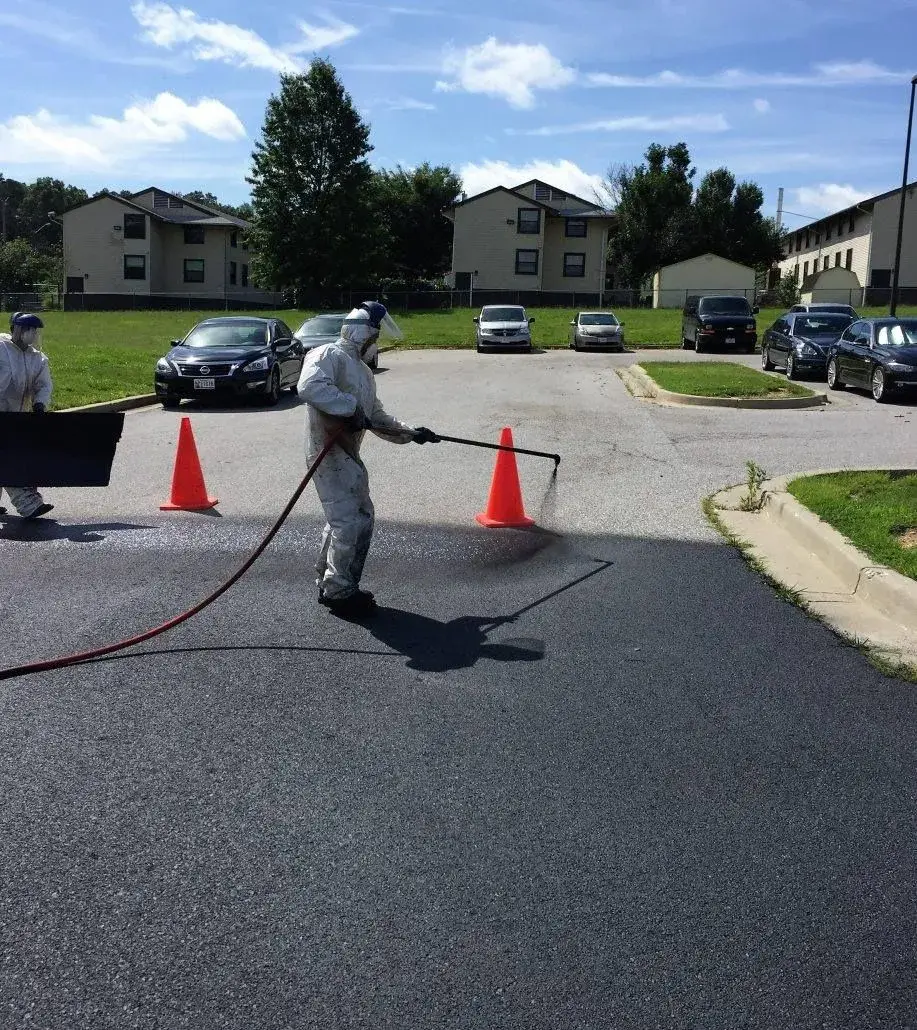
Asphalt that looks gray instead of black, has a rough or pitted texture, or shows loose aggregate on the surface is oxidizing. This is a natural process, but sun, moisture, and traffic speed it up. When asphalt loses its binder and begins to ravel, the surface becomes increasingly vulnerable to cracking and water penetration. A timely seal coat can restore protection and extend the life of the pavement significantly. Think of it the same way you think about painting the exterior of a building. You do it before the damage sets in, not after.
Edge Cracking or Crumbling Along the Borders
The edges of a driveway or parking lot are typically the first place damage shows up because they receive the least structural support. If you are noticing crumbling, cracking, or separation along the perimeter, that damage will work its way inward if ignored. For residential driveways, this often happens where vehicles repeatedly pull off the edge. For commercial lots, it commonly appears along curb lines or in areas where the base material was not adequately compacted during installation.
What to Do Next
Not every sign of wear means a full replacement is in order. In many cases, targeted repairs and a proper seal coat are all a surface needs to perform well for years to come. The key is getting an honest evaluation from someone who knows what to look for and will tell you the truth about what your pavement actually needs.
Flintstone Paving serves homeowners and commercial property owners across Missoula County, Ravalli County, Lake County, Sanders County, Granite County, and Mineral County. If your pavement is showing any of these signs this spring, reach out for an assessment before the summer season gets underway. Quality asphalt work done at the right time is always the most cost-effective choice in the long run.
A Warning About Shortcuts That Cost You More in the Long Run
If a contractor quotes you a paving job and mentions using gravel or millings with a sealcoat applied over the top as a finished surface, walk away. This approach is not asphalt paving and it is not a comparable alternative no matter how it is presented. Gravel does not compact and bond the way asphalt does, and a sealcoat applied over loose material has nothing solid to adhere to. What looks finished on day one will shift, deteriorate, and fail well before any properly installed asphalt surface would. Flintstone Paving has stepped in on more than one job where a homeowner hired a contractor using this method, only to end up paying twice because it failed. First to the contractor who cut corners, and then again to have the mess cleaned up, the base properly prepped, and the job done right. A legitimate asphalt paving quote will never include gravel and sealcoat as a substitute for actual asphalt. It is a red flag if that language appears in your estimate and is worth getting a second opinion.


Comments